


Six decades of Disney robotics
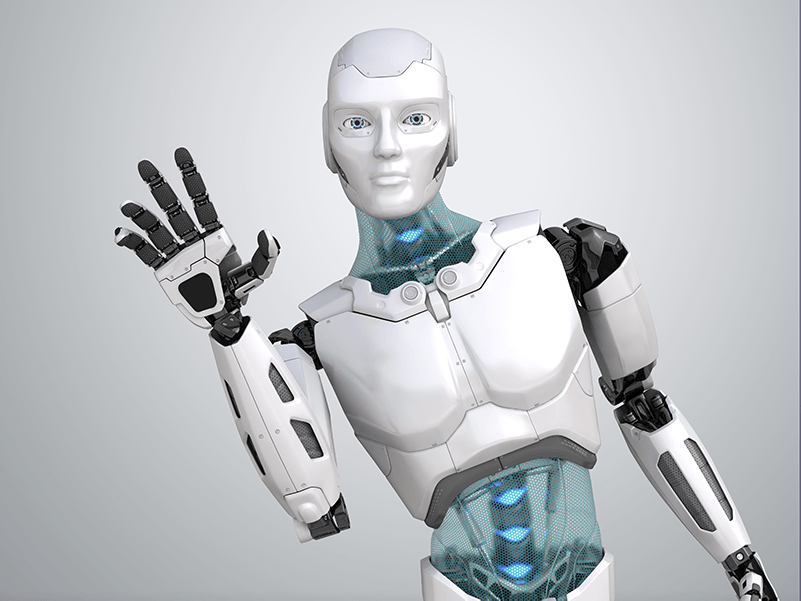
When you think of robotics, Mickey Mouse probably doesn't come to mind, but it should. Over the past six decades, Disney has made groundbreaking achievements in robotics, and it all started with a toy bird and a president. Here's how Disney managed to make Abe Lincoln talk and Spider-Man fly.
The history of Disney robotics
It all began when Walt Disney visited a store on vacation and saw a mechanical toy bird. He was fascinated. What if he could make his animations three-dimensional? What if his cartoons could live outside the screen?
Soon Walt had his Imagineers take the bird apart and examine it. Next, they investigated how they could create electronically animated 3D characters, later called Audio-Animatronics, in a project called "Project Little Man" . First, the team studied real people in the studio - including actor Buddy Ebsen - and closely tracked their movements to create models of their heads and make the characters realistic. Then, in 1963, Disney introduced the first animatronics in Walt Disney's Enchanted Tiki Room. For the first time, visitors could see the characters speak and sing right before their eyes, in a colorful and tropical display that foreshadowed the future of audio-animatronics.
Disney brings Abraham Lincoln to life
Finally, Disney and its Imagineers went from the jungle to the White House as they embarked on their most ambitious project yet: Bringing Abraham Lincoln to life. They performed Lincoln at the 1964-1965 New York World's Fair to an astonished audience. During each performance, Lincoln would stand up, look around the room at the shocked faces and open his mouth: "The world has never had a good definition of the word 'freedom'." For the first time in a century, Lincoln was able to inspire Americans with a live speech. How did they do it? To find out, you'll have to follow the music.
The machine used a system of hydraulics and pneumatics that worked like a piano from an old western saloon. But instead of reading mechanically recorded notes, the system read mechanically recorded movements. A magnetic tape sent electrical signals to the valves in Lincoln, causing him to move his arms, blink, look around the room and move his lips, much like the animatronics in Walt Disney's Carousel of Progress:
Making Disney robots more realistic
Looking at footage of Animatronic Lincoln and other early animatronics, it's clear that the technology was... was new. Lincoln's movements are sharp and jerky, and his face lacks expression. Fortunately, Disney has made some improvements since Lincoln's debut and continues to develop the robotic technology to amaze viewers. In 2017, Disney's Imagineers invited guests to hear the Shaman of Songs on Pandora, and now they've entered superhero territory:
A few years ago, Disney took its efforts to the skies with'Stuntronics', autonomous robotic acrobats that soar through the air and perform feats with ease. In June 2021, this technology was unveiled to the public in the form of a flying Spider-Man animatronic at the Avengers Campus at Disneyland Resort. But long before there was Spider-Man, there was Stickman:
Stuntronics: Controlling air movements with Stickman
The Imagineers began their project by trying to control movement in the air. How could they make an object fly and land exactly the way they wanted it to? They investigated the conservation of angular momentum. It's the same technique that figure skaters use to control their speed when jumping and spinning, and the same technique that squirrels use to control their landing when jumping from high points.
From this, Stickman was born. Stickman is a Z-shaped hinged robot that somersaults in the air by latching and unlatching after releasing from a pendulum launch. To the naked eye, Stickman may look like a simple stick flying through the air, but behind it is a system of sensors, laser rangefinders, accelerometers and gyroscopes that help the Disney robot process data during flight, correct its position and make the perfect landing every time.
Stickman eventually transforms into a more human-like robot that controls its center of gravity and strikes poses during flight. Although the stuntronics are only planned for Disney's parks, there is a possibility that they will move to movie sets and serve as test dummies for stuntmen.
You may see Spider-Man soaring through the skies, but what about on the ground? The Imagineers are way ahead of you with a 2.5-foot-tall robot named Kiwi.
Project Kiwi, "I am Groot"
or Project Kiwi, Imagineer Principal Scott LaValley, who came from Boston Dynamics and worked on the first version of Atlas, has been working with a team to develop a small, bipedal, free-moving robot that may be used at Disney Parks in the future. Such a unique project requires unique parts.
There aren't many bipedal components in the robotics industry that support non-industrial functions like theme parks and operate autonomously, so Project Kiwi required many custom, patentable parts. Kiwi's custom humanoid skeleton can resemble multiple characters, and its custom performance software gives it a specific, personalized gait.
Imagineers used custom-printed polymer to create prototypes of the frame and later customized parts from industrial printers. Kiwi's current skeleton is hollow to allow air to cool him down, and eventually his clothing will allow air to escape near his feet. All of Kiwi's actuators were built from scratch by the Disney robotics team, and his gearboxes share energy and motors between different parts of his body. This keeps Kiwi's innards as compact and unobtrusive as possible.
Despite Kiwi's impressive resume and capabilities, the Imagineers still have a long way to go with a lot of research ahead of them. This includes preparing Kiwi to navigate uneven surfaces, handle unpredictable interactions with people and use more lifelike facial expressions.
What's next for Disney robotics?
In robotics, it seems that everything we thought was impossible will one day be possible, and Disney robots are no exception. If Boston Dynamics can send robots like Spot into the real world, who's to say Disney can't send its characters?
Disney's journey from a mechanical bird to state-of-the-art robots is an example of the power of imagination combined with technology. For engineers and designers using platforms like 3Dfindit.com, Disney's evolution illustrates the importance of innovative thinking and precise component selection.
Just as Disney's Imagineers pioneered robotics with customized parts and unique designs, 3Dfindit enables engineers to find and implement the exact components they need for their projects. Whether you're creating the next animatronic marvel or designing industrial machinery, with access to the right parts, you can turn visionary ideas into reality.


